
The James Webb Space Telescope (JWST) is a large infrared-space observatory launched on 25 December 2021 and operated by NASA in partnership with the European Space Agency (ESA) and the Canadian Space Agency (CSA) - wikipedia 
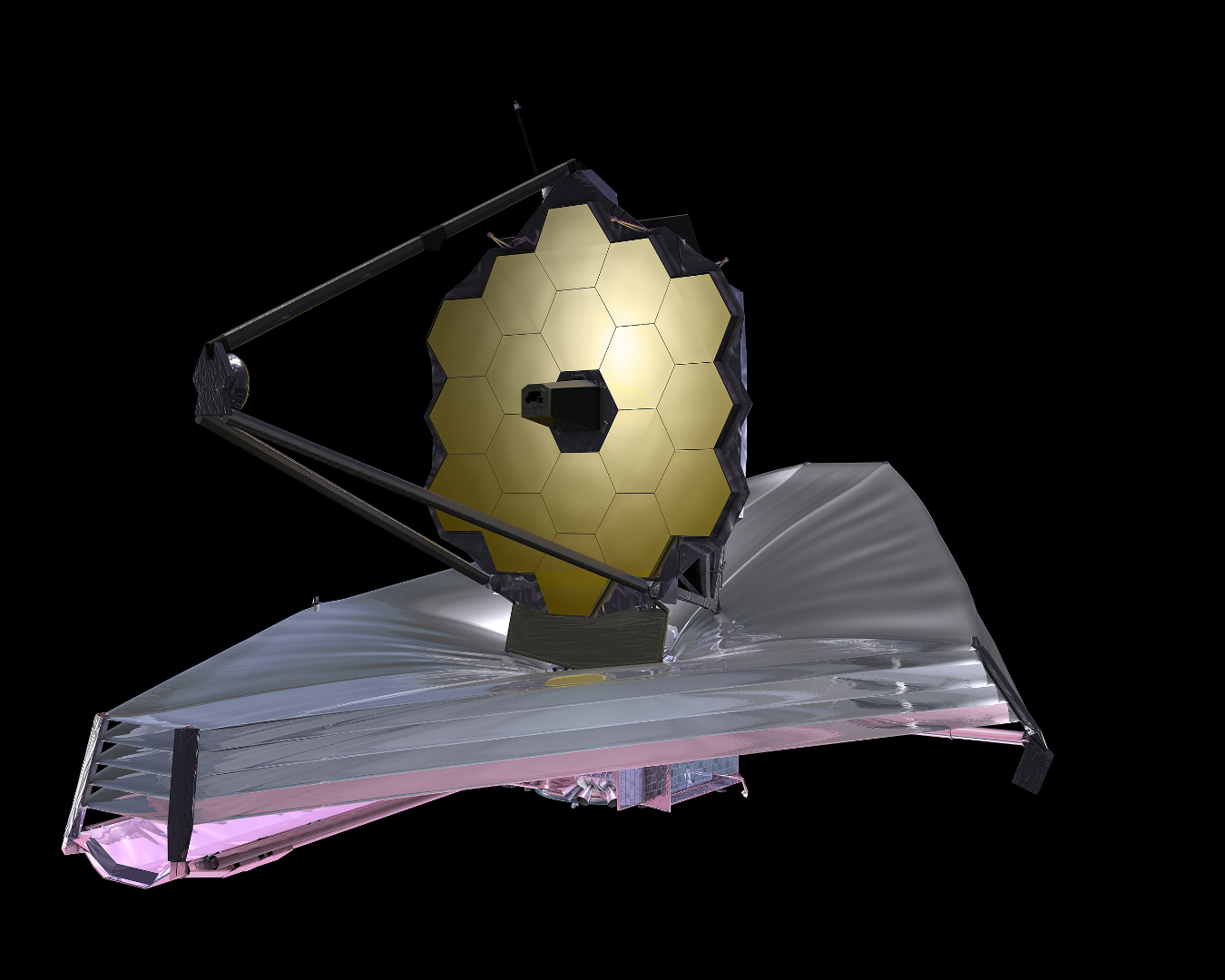
Three-quarter view of the top of the James Webb Telescope - wikimedia 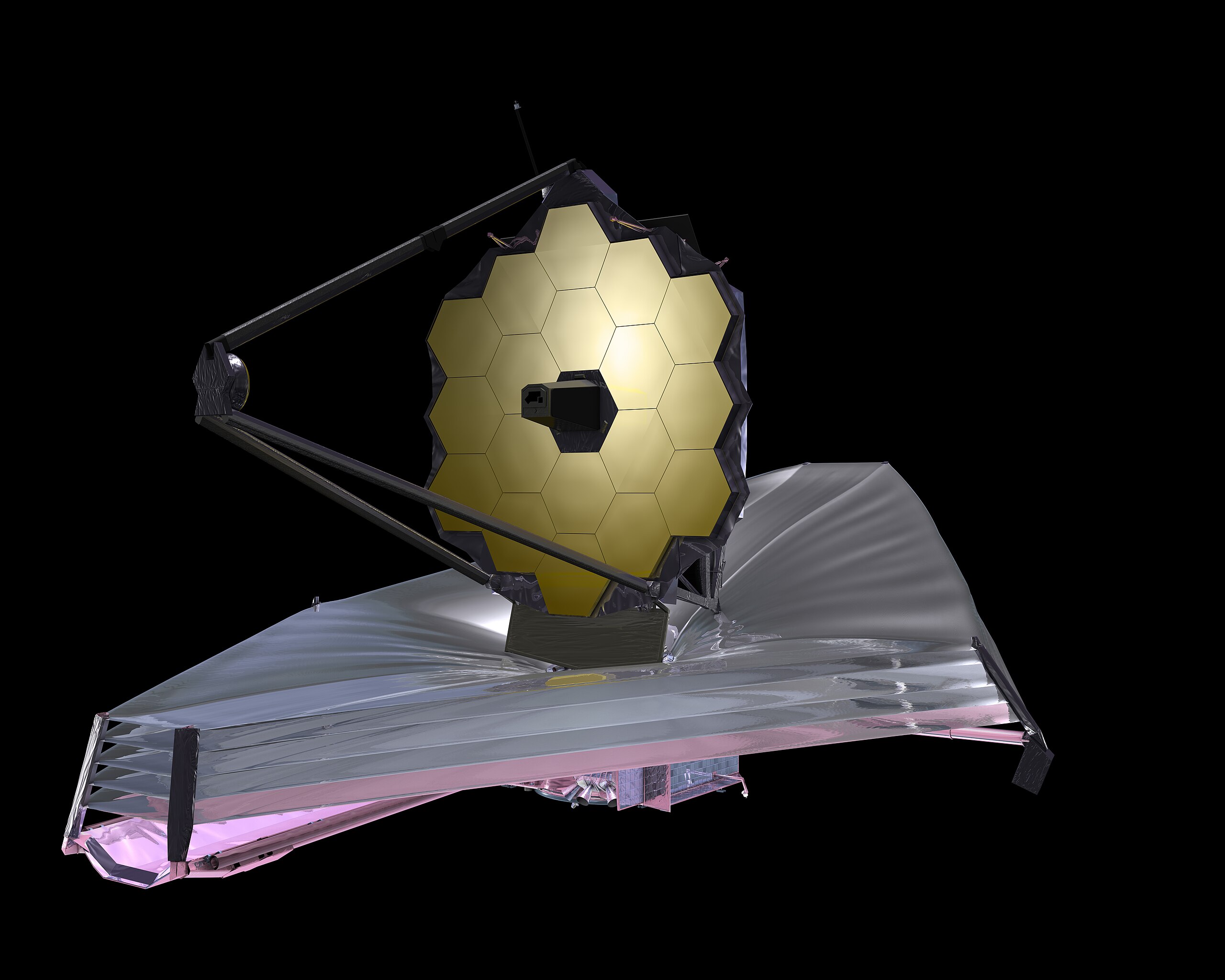
JWST was designed primarily for cosmology, galaxy formation, exoplanet atmospheres and early-universe studies. Its unprecedented sensitivity in the infrared allows it to detect very faint, distant objects. However, because of its narrow field of view and its observing strategy, its use in surveying large areas of the sky is limited - reddit
# How JWST Might Contribute?
- JWST’s infrared sensitivity means that if Planet Nine is a cool, distant object, perhaps with residual heat or reflecting little sunlight, it might emit in the mid-infrared where JWST is optimised - astronomy.com
- If a candidate object is already pinpointed in wide-field surveys, JWST could be used for follow-up: characterising its spectra, thermal emission, or confirming its planetary nature rather than surveying blind.
# Limitations
- JWST has a very narrow field of view and is not practical for sweeping large portions of the sky looking for unknown objects- reddit
- Because Planet Nine, if it exists, may reside in a part of the sky near the galactic plane, or be extremely faint, pointed follow-up rather than blind survey is the realistic role for JWST.
- No official peer-reviewed announcement has yet been made of JWST detecting Planet Nine; news reports suggest researchers are requesting time on JWST, Hubble and ALMA to follow up candidate outer solar system objects. phys.org (2025
# Current Status and Prospects
As of 2025 the Planet Nine hypothesis remains unconfirmed. Some recent discoveries of extreme distant objects pose challenges to the hypothesis, but none provide definitive proof or locate the planet - space.com
JWST is unlikely to be the first instrument to *discover* Planet Nine, but it remains valuable for *characterising* any candidate: if wide-field surveys identify a moving faint object consistent with Planet Nine’s orbit and mass estimates, JWST could obtain infrared spectra, thermal emission data, and refine its physical properties.
Meanwhile, upcoming wide-field surveys such as the Vera C. Rubin Observatory (via the Legacy Survey of Space and Time) are expected to play the leading role in either detecting or ruling out Planet Nine in the near future - astronomy.com
# Summary In summary: JWST is a powerful astronomical observatory whose strengths lie in infrared sensitivity and high resolution, but whose limitations make it unsuited for large blind searches. Its contribution to the Planet Nine search is as a high-precision follow-up instrument, not a survey instrument. The hunt for Planet Nine continues, with wide-field telescopes taking the lead and JWST waiting in the wings for the moment a candidate emerges that demands detailed study.